On Gathering
The best way to fight burnout
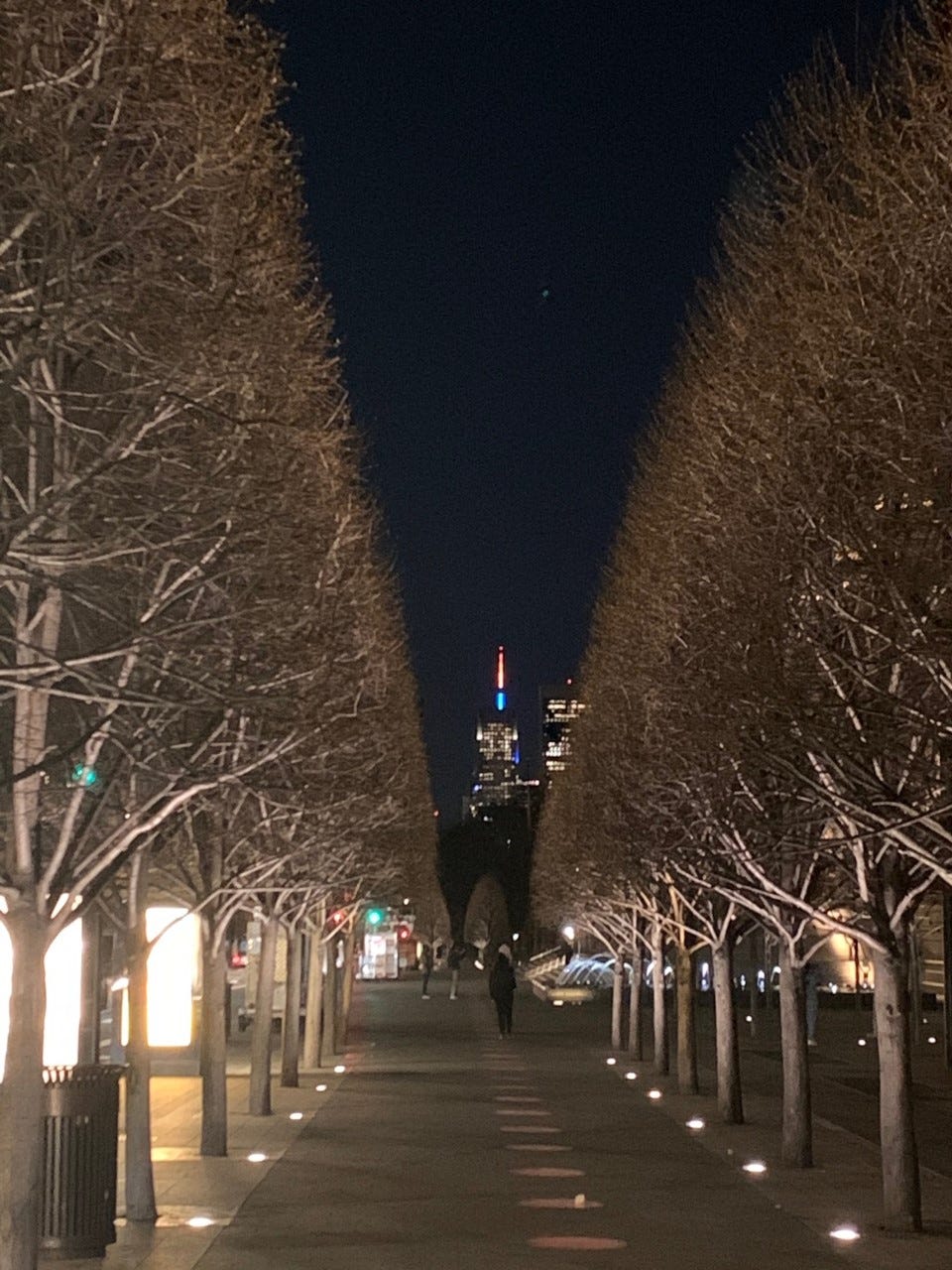
I did something a little dangerous the other day.
I went to a holiday gathering.
Talked too much, laughed too loud, and unwisely downloaded 2 years of stress and anxiety into a bottle of High West Rendezvous Rye. Sorry, not sorry. It felt so good to share life, in person, with people I genuinely enjoy and trust.
But I worried a bit about being there. There is still an element of risk in bringing people together. The whole group is triple-vaccinated. But our host was cautious and asked us to test before coming. One of our friends had a positive antigen test literally as they were walking out the door to come. This thing is everywhere.
There are those who would argue that it doesn’t matter, that we are unlikely to get seriously ill, that we must live our lives, that we should not be fearful. But asserting something does not make everyone believe. It’s hard to break two years of conditioning. Of watching people die or nearly die of COVID. It makes one risk-averse, especially when one cares for immunocompromised patients. The San Antonio Breast Cancer Symposium was not as vibrant this year because many people who usually attend decided that the risk was too great. When was the last time people decided that it was too risky to go to a medical conference? And it goes beyond considering whether to mingle with large numbers of strangers. For many, the pandemic has introduced a risk calculation into every human contact. But it’s a trust calculation rather than a risk calculation. Getting COVID is not an act of God. Another person gives it to you. So in every interaction there is some consideration of whether I trust this person, or these people, to have been vaccinated, to have been careful, to have made the right choices about testing and isolation.
This is corrosive. It imposes a psychic cost on interaction. It introduces friction and resistance to creating community. And community is one of our most important tools for fighting stress. When people cannot share in a community, they become lonely. And lonely people are very vulnerable. Hannah Arendt famously pointed out that they are vulnerable to totalitarian control and manipulation. They are also vulnerable to despair, to loss of faith and hope in a collaboratively imagined future that is better than today. Vulnerable to the depression that lies at the end of burnout.
Now, it’s a long way from worrying a bit about the risk of a holiday gathering to totalitarian isolation. I don’t want to be dramatic. The point is that connection is central to being an intact human. The challenge is that isolation is somewhat built into the structure of medicine. In the military, or sports, or most corporate environments, teamwork is central to the job. Interaction and collaboration is the point of these careers. Medical practice, however, generally does not involve striving with your colleagues as a team towards a common defined goal. There are exceptions. I imagine that surgical teams or trauma teams do have this experience in the intensity of the moment. But oncology encounters are intensely individual connections between doctor and patient, repeated over time. One works with nurses and advanced practice providers and staff, of course, and is a member of a team in that sense. But one usually does not have a visceral experience of shared labor and responsibility. And interaction with your colleagues is limited. I can be in the clinic all day and never talk to the person seeing their patients in the next pod. I can work all day on my academic day and not talk to another person outside of Zoom. With work from home, there are days when I am the only one on my floor in the office. Connections with colleagues can come through academic interactions such as conferences or consultations, of course. If one is in administration then connection, such as it is, can come at meetings or, more likely, in the interstices between meetings. But the pandemic has introduced significant barriers to these impoverished connections. Work-from-home and video conferencing have constrained even these opportunities. It sounds odd to say it, but my sense is that many oncologists (and probably other medical professionals) are starved for meaningful human contact. And the perceived lack of time that comes from feeling chronically overwhelmed makes it difficult to seek it.
Despite all the barriers, I would suggest that finding connections is one of the most important ways to stay resilient in the face of stress. To the extent possible, leaders should try to find ways to foster unstructured interaction. One such approach is the Battle Buddy system employed by the military and recently adapted at the University of Minnesota to address the stresses of COVID19 in the ICUs and emergency wards. Another approach is to set up effective peer mentoring systems whereby small groups can meet and decompress. But, at the end of the day, this kind of meaningful connection cannot be legislated into existence. And we must recognize that most people do not find their most sustaining connections at work. People must seek them elsewhere in their lives, perhaps overcoming inertia and, yes, fear of risk, to do so. For some, this is a running group. For others, perhaps a dance class, or a cooking class. Or a reading group. Or any one of a million ways that we can connect with our fellow humans. Yes, this is an investment of time that we may feel like we don’t have. But if we don’t pay ourselves first, we will become depleted and unable to bring our best selves to our patients and our colleagues. We have had our heads down for so long. If we want to survive and even thrive, we must get our eyes up and find others. Others who can remind us that we are so much more than our work.
Be well. Stay safe.
If you are interested in reading more about this, I suggest Priya Parker’s The Art of Gathering.
It is funny what isolation does. One loses the ability and the urge to connect so fast. I find it really hard to push myself out of the house to meet my friends because I have so much to do, and it is cold outside, and I need to get all the children ready and look at that pile of laundry, and it is so cosy here, and, and, and... but then one does meet up and comes home thinking- why didn't I do this before? This was so refreshing!
I was doing this Yale online course on "the art of well-being" or "wellness", or something like that, and one of the assignments was to talk to strangers. I find my "small talk skills" quite deficient, and I always struggle at big gatherings because what could I possibly say that is not related to my work, my family or me... and who cares, anyway? I decided to practice with a taxi driver one long taxi drive from the airport. I learned the man was fluent in Italian, had lived in Rome for three years and gave me tips on how to convince my husband to move to a small town in the middle of the forest (my secret, or not-so-secret now, aspiration is to become a gnome). Anyway, human connection is underrated, always refreshing and energizing.
I do not, however, envy the hangover I imagine you had the day after ;)
Merry Christmas and a better 2022.